

Why More Palletized Goods Are Beginning to Focus on “Top Protection”
Today, many companies in the food, chemical, building materials, and warehousing logistics industries are facing a practical problem during pallet shipment: although the sides of the pallets are already wrapped with stretch film, the top of the goods is still vulnerable to rainwater, dust, and warehouse environmental conditions. Especially during outdoor loading, temporary storage, and long-distance transportation, pallets without top protection are more likely to suffer from wet cartons, deformed packaging, and product contamination.
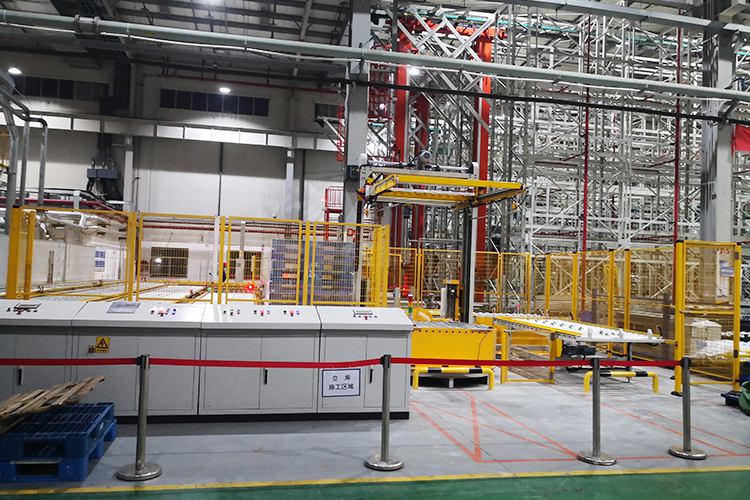
In the past, many companies believed that wrapping the sides tightly was enough for transportation protection. However, after actual shipping, they realized that the top area is often the most overlooked part of pallet packaging. Bagged products, carton-packed goods, and moisture-sensitive products are especially vulnerable. Without complete top coverage during loading, storage, and logistics transfer, rainwater can easily soften and damage the outer packaging.
This issue becomes even more serious during rainy seasons and export transportation, where goods may go through long-term storage and repeated handling. Insufficient top protection not only affects product appearance upon delivery but may also result in customer rejection.
As a result, more factories are now adopting top-cover online stretch wrapping machines to complete automatic top covering and stretch wrapping simultaneously, improving the overall protection performance of palletized cargo.
Why Traditional Stretch Wrapping Is Becoming Less Suitable for Modern Transportation Requirements
In the past, many factories used standard online stretch wrapping machine systems that only wrapped the sides of palletized goods. However, as transportation requirements continue to increase, many companies have realized that side wrapping alone is no longer enough for complex logistics environments.
Industries such as food, feed, building materials, and chemicals often require high levels of moisture protection. Carton-packed products are especially vulnerable during outdoor loading and logistics transfer if the top remains exposed to rain or humidity.
Many companies only realize after transportation damage occurs that product loss is not always caused by collisions during transport, but by long-term exposure to moisture from the top.
A top-cover online stretch wrapper automatically applies a top sheet before completing the overall wrapping process, creating a fully enclosed packaging structure between the top and sides. For palletized goods, the key concern is no longer simply whether the load is secured, but whether the cargo can remain intact after transportation.
Why Automated Factories Are Paying More Attention to Online Top-Cover Packaging
As automated logistics and unmanned packaging workshops become increasingly common, many large factories are redesigning their end-of-line packaging processes. In the past, companies often relied on manual top covering or manual placement of top sheets, which resulted in lower efficiency and difficulty keeping up with continuous shipping operations.
This is especially true in beverage, food, and logistics industries where production lines already operate at high output speeds. If top-cover packaging still depends on manual labor, bottlenecks and delays can easily occur during peak periods.
For this reason, more companies are now introducing top-cover online stretch wrapping machines integrated with conveyor systems to achieve automatic pallet conveying, automatic top covering, automatic wrapping, and automatic film cutting in one continuous operation.
Compared with traditional separate packaging methods, integrated online top-cover wrapping systems not only improve packaging efficiency but also provide more stable and consistent protection performance.
For many automated factories, the real concern today is no longer whether packaging is completed, but whether the packaging process can operate continuously and reliably.
Why More Industries Are Adding Top-Cover Packaging Processes
Industries currently adopting top-cover online stretch wrapping machines include food, beverage, feed, building materials, chemicals, and export logistics. These industries share a common requirement: products often go through long transportation cycles and demand high packaging integrity.
For example, the food industry requires strict hygiene and dust prevention, while the building materials industry must prevent rain exposure during transportation. Export logistics companies are especially concerned about long-term moisture protection during container shipping.
As a result, more companies are now incorporating “top protection” into their overall packaging solutions rather than focusing only on side stabilization.
Large warehouses and automated factories have already begun treating top-cover packaging as an important part of their overall logistics systems.
Why Top-Cover Online Stretch Wrappers Are Becoming an Important Direction in Automated Packaging
As transportation environments become increasingly complex, companies are demanding higher standards for pallet packaging integrity. In the past, factories focused mainly on packaging speed, but today many companies have realized that the final condition of the packaging after transportation is what truly affects customer satisfaction.
For moisture-sensitive, dust-sensitive, and high-value products, insufficient top protection can negatively affect customer acceptance even if the products themselves remain undamaged.
As a result, top-cover online stretch wrapping machines are gradually evolving from auxiliary packaging equipment into an essential part of modern automated logistics systems. Improving transportation protection, reducing cargo damage, and standardizing packaging quality have become key goals in end-of-line packaging upgrades.