

The root cause? No top-cover protection.
Most factories default to standard side-wrap-only pallet wrappers because they're cheaper and simpler. But the total cost of unprotected pallets—product damage, moisture exposure, dust contamination, customer complaints, and rework—can easily exceed $50,000 per year for a mid-sized operation. That number is before you factor in reputation damage and lost repeat orders.
The FDTP1650F-L Top Cover Pallet Wrapping Machine solves this problem in one integrated machine. It wraps the sides AND seals the top in a single automated cycle—no manual top-sheeting, no separate machine, no extra labor.
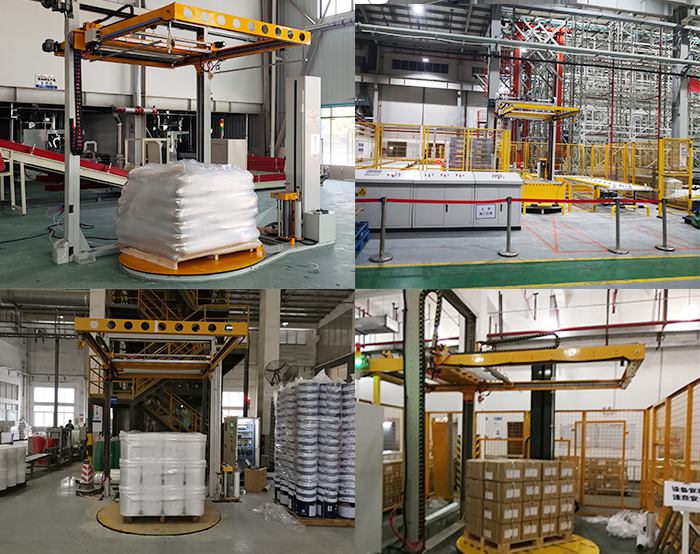
The Real Cost of Skipping Top-Cover Protection
Let's quantify the risk. Consider a typical export operation shipping 500 pallets per month:
Without Top Cover Pallet Wrapping Machines:
Moisture damage rate: 3–5% of shipments affected during rainy season or ocean transit
Average loss per damaged pallet: $200–800 (product value + rework + replacement)
Annual moisture-related loss: $36,000–192,000
Dust contamination: Additional 1–2% for sensitive products (electronics, food, pharmaceuticals)
Customer complaint cost: Difficult to quantify, but often leads to contract loss
With Top-Cover Wrapping:
Damage rate drops to <0.5%
Annual savings: $30,000–150,000+
Payback on machine investment: Often within the first year
The numbers make the case obvious, yet many operations continue to skip top-cover wrapping because they assume the equipment is too expensive or complex. It's not.
Top-Cover vs. Standard Wrapping: What's the Difference?
|
Aspect |
Standard Side-Only Wrapper |
FDTP1650F-L Top-Cover Wrapper |
|
Coverage |
Sides only |
Sides + top sealed |
|
Moisture Protection |
None on top |
Full seal |
|
Dust Protection |
None on top |
Full seal |
|
UV Protection |
None |
Partial (top covered) |
|
Extra Labor for Top Sheet |
Yes (manual) |
No (automatic) |
|
Export-Ready |
No |
Yes |
|
Outdoor Storage Suitable |
No |
Yes |
|
Film Savings |
1:2 typical |
1:2.5 (250%) |
The FDTP1650F-L uses a dedicated motorized film carriage on a dual-guide column. After the side wrap cycle, the carriage rises above the pallet, dispenses a top film sheet, and the turntable rotates to tension it. The entire process—side wrap, top cover, film cut, return to start—is fully automatic via PLC control.
5 Key Factors When Choosing a Top-Cover Wrapper
1. Film Carriage System Quality
Not all film carriages are created equal. Look for:
Dual-guide column design for smooth, stable vertical travel
Motorized drive (not gravity-fed) for consistent film tension
Pre-stretch capability of at least 1:2.5 (250%) for maximum film savings
Variable tension control via potentiometer for different film types
2. PLC Control and Automation Level
A top-cover wrapper should be a one-button machine. The operator loads the pallet, presses start, and the machine handles everything: side wrap, top cover, auto film cut, and return to home position. Look for:
Touch screen interface
Independent layer count settings (bottom vs. top)
Auto photoelectric height detection
Programmable wrap patterns
3. Turntable Capacity and Stability
The turntable must handle your heaviest pallets without vibration or drift:
Capacity: At least 2,000 kg for industrial applications
Speed: 0–12 RPM variable via VFD
Surface: Anti-slip texture for load stability
Diameter: Sized to accommodate your pallet dimensions plus margin
4. Build Quality and Machine Weight
Top-cover wrappers carry a vertical film carriage, which adds weight and stress to the machine frame. A 2,000 kg machine weight indicates robust construction. Lightweight machines (under 1,500 kg) may vibrate during operation, reducing wrap quality and machine lifespan.
5. Optional Features That Add Value
Slope ramp: For easy pallet loading without a forklift
Weighing system: Built-in scale for inventory management
Top-press device: For unstable or lightweight loads that need compression
Custom sizing: Larger turntables for oversized pallets