

Standardized Pallet Packaging Drives Demand
In modern logistics and manufacturing systems, palletized transportation has become the standard. However, higher requirements for load stability and consistency have exposed the limitations of manual wrapping, which is inefficient and inconsistent.
Stretch wrapping machines provide automated, uniform film application, becoming essential for improving packaging efficiency.
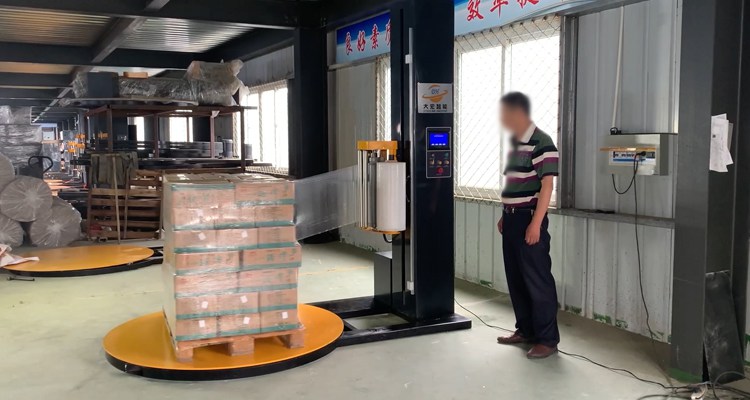
Machine Structure: Core Components
A typical stretch wrapper consists of:
- Turntable system
- Vertical mast with lifting mechanism
- Film carriage (pre-stretch system)
For example, a standard machine may feature a 1650 mm turntable diameter and a load capacity of up to 2000 kg, suitable for most palletized goods.
Working Principle: Multi-Layer Film Wrapping
During operation, the pallet rotates on the turntable while the film carriage dispenses stretch film. The carriage moves vertically to wrap from bottom to top, forming multiple overlapping layers that enhance load stability and protection.
System Configuration: Automation and Control
Most machines use PLC control systems, allowing adjustable rotation speeds (typically 0–12 rpm) and programmable wrapping cycles.
Features include:
- Soft start/stop for smooth operation
- Pre-stretch film carriage to reduce film consumption
- Chain-driven lifting system with frequency control
Advantages: Efficiency and Cost Reduction
Stretch wrapping machines can handle approximately 20–40 pallets per hour.
Key benefits include:
- Reduced labor requirements
- Lower film consumption through pre-stretch technology
- Improved load stability during transport
- Protection against dust and moisture
Industry Applications
These machines are widely used in:
- Automotive parts
- Electronics
- Food and beverage
- Chemical industry
- Building materials
- Warehousing and logistics
They ensure standardized packaging and improved operational efficiency across industries.
Case Study: Manufacturing Upgrade
A manufacturing company replaced manual wrapping with an automatic machine. The result was more consistent packaging, reduced labor involvement, and significantly improved shipping efficiency.