

During pallet storage and transportation, stretch wrapping is widely used as a basic packaging method. However, in certain application scenarios, wrapping only the sides of the pallet may not provide sufficient protection against rain, dust, or outdoor storage conditions. For products such as chemical raw materials, food and beverages, and paper products, top protection is especially critical. To address this practical demand, top sheet stretch wrapping machines have been increasingly applied in pallet packaging processes, enabling integrated side wrapping and top coverage.
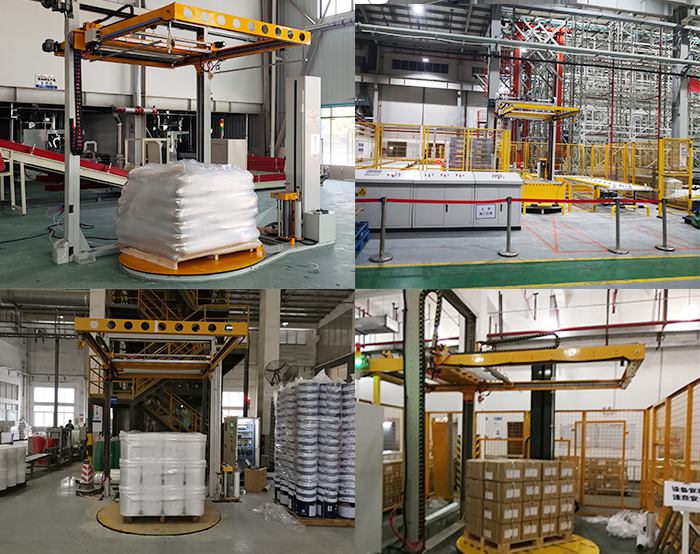
Additional Top Sheet Function Based on Standard Pallet Wrapping
A top sheet stretch wrapping machine is developed by adding a top sheet application system to a conventional pallet wrapping machine. After completing the side wrapping process, the machine automatically detects the load height and activates the top sheet unit, smoothly placing the film over the top of the pallet. Combined with side wrapping, this creates a unified protective structure without altering the original pallet packaging workflow.
Impact of Top Sheet Wrapping on Load Protection
With top sheet coverage, the wrapped pallet forms a more complete outer protective layer, helping reduce moisture penetration and dust accumulation. For pallet loads requiring outdoor temporary storage or long-distance transportation, five-sided wrapping provides better adaptability in practical applications. The overlap between the top sheet and side film also contributes to improved load stability.
Automated Control and Integrated Wrapping Process
Top sheet stretch wrapping machines typically adopt PLC control systems to manage wrapping cycles, top sheet application timing, and operational sequences. The machine first completes bottom and side wrapping, followed by automatic top sheet placement. The entire process requires minimal manual intervention, ensuring consistent packaging quality for each pallet and making it suitable for batch outbound operations.
Parameter Adjustment for Different Pallet Sizes
In real-world applications, pallet dimensions, load height, and weight vary significantly among users. Top sheet stretch wrapping machines are designed with flexible parameter settings, allowing adjustment of turntable diameter, wrapping height, and top sheet film width. Photoelectric sensors can automatically detect load height, reducing manual setup errors and improving operational efficiency.
Typical Industry Applications
Industries such as chemicals, papermaking, food and beverage, building materials, and electronics commonly use top sheet stretch wrapping machines for pallet loads with high moisture and dust protection requirements. After wrapping, pallets become more stable and easier to stack, load, and transport, while also maintaining a cleaner appearance. For products stored under varying environmental conditions, this equipment offers practical value in the packaging process.
Equipment Selection Considerations in Packaging Lines
From a packaging process perspective, top sheet stretch wrapping machines are not intended to replace traditional pallet wrapping methods but rather to enhance them with additional protection. Companies can choose whether to include top sheet functionality based on product characteristics and storage or transportation conditions. With proper equipment selection and parameter configuration, stable and efficient pallet packaging operations can be achieved. By combining side wrapping with top coverage, top sheet stretch wrapping machines provide a more complete protective solution for palletized goods.