

Pallet packaging takt unstable? Automatic wrapping equipment smooths manual efficiency fluctuations
In high-volume pallet shipping environments, manual wrapping often results in uneven tightness, long cycle times and inconsistent appearance. As shipment volume rises, it becomes difficult for manual methods to maintain a steady rhythm—especially when pallet sizes vary or stacking patterns are complex—thus packaging quality easily suffers. Pallet automatic stretch wrap machines standardize the wrapping process by replacing repetitive manual film-wrapping with mechanical wrapping, ensuring consistent packaging performance during peak outbound periods, cross-regional transport and long-term storage.
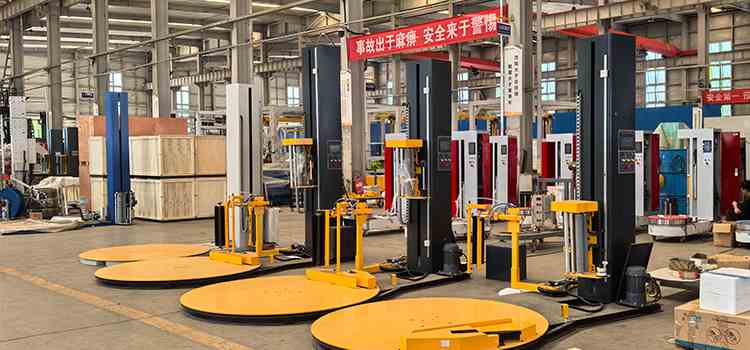
Automatic film loading and cutting make the wrapping flow more continuous
The core advantage of the pallet automatic stretch wrap machine is its fully automated execution of wrapping steps. The machine performs automatic film clamping, automatic film cutting and film finishing to achieve an end-to-end automated operation from start to finish. Operators no longer need to manually secure or trim the film, or bend to finish film tails, which improves on-site convenience and reduces worker fatigue. After wrapping, the machine automatically cuts and presses the film tail so the film head adheres neatly—avoiding slack, lifting edges and other defects caused by nonstandard manual handling. This continuous automated flow not only improves packaging appearance but also reduces film waste and improves film utilization.
Pre-stretch film carriage improves film adhesion and controls consumable usage
The pallet automatic stretch wrap machine uses a pre-stretch film carriage that stretches film before application so the film adheres more tightly and evenly to the pallet load. Pre-stretching increases film coverage strength and produces firmer layers while reducing film consumption—helpful for enterprises with large-volume outbound shipments to lower long-term packaging costs. An adjustable tensioning system lets operators tune wrapping force to match the cargo—avoiding over-tightening that can deform soft packages or cause film breakage during wrapping.
Multiple adjustable parameters increase suitability for different pallet loads
Pallet wrappers typically support various modes and adjustable settings such as bottom reinforcement wraps, top seal wraps, turntable speed and film carriage lift speed to accommodate different cargo types. For example: chemical pallets may require higher tension to increase overall binding for transport stability; carton-based e-commerce pallets may increase top and bottom reinforcement wraps to reduce stacking shifts; mixed pallets can set film carriage travel zones to avoid uneven load heights being overloaded. These adjustable parameters enhance the machine’s adaptability across industries, packaging formats and shipment rhythms.
Standalone machine is easy to deploy—suitable for small and medium warehouses and production sites
As a standalone unit, the pallet wrapping machine is flexible to install and fits factories, warehouse shipping areas and e-commerce fulfillment centers without requiring complex conveyor line modifications. Enterprises can place the machine in pallet staging areas, shipping doors or packing stations according to forklift routes. The compact footprint and simple operation allow rapid operator onboarding, making it a practical step for most SMEs to transition from manual packaging to semi-automation.
The pallet stretch wrapping machine, through automation, pre-stretch carriage and adjustable operation parameters, standardizes and streamlines pallet packaging while improving transport stability. As a standalone device, it offers deployment flexibility, ease of operation and multi-scenario adaptability—making it a key tool for companies aiming to raise packaging consistency and outbound efficiency.