

Roll materials are prone to surface wear—cylindrical wrapping machines improve outer-layer protection
Roll-type materials—such as nonwoven fabric rolls, paper rolls, rubber rolls, coil materials and film rolls—commonly undergo multiple handling steps including loading, stacking, transport and storage. Without protective covering, the outer paper or material surface is easily scratched, dented or distorted when contacting equipment, pallets or forklift tines. Surface damage can affect downstream processing quality or even render a roll unusable. The cylindrical stretch film wrapping machine is designed specifically for rolls: by rotary wrapping it creates a continuous protective film layer that reduces transport damage and stabilizes rolls during shipment and storage.
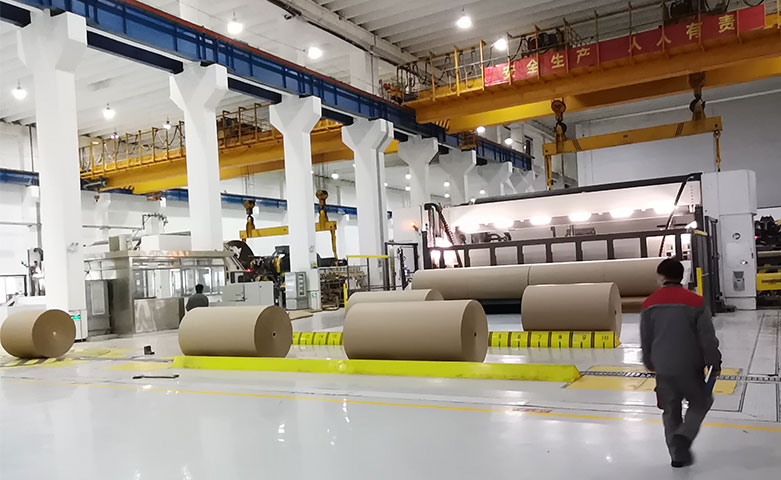
Full-coverage wrapping protects the roll surface and resists external contact
The kraft paper roll wrapping machine commonly uses a turntable rotation method so the roll rotates steadily while the film carriage wraps synchronously. The spiral wrapping process tightly adheres the film to the roll surface to form a continuous protective layer. This film layer can: cover roll edges to reduce local pressure damage during handling; protect surface texture from abrasion; keep the product clean and reduce dust accumulation; and provide basic protection from ambient humidity. For frequently transported or long-stacked rolls, full-coverage wrapping significantly enhances physical protection.
Pre-stretch film carriage ensures stable film adhesion and improves tightness
Cylindrical wrapping machines often equip a pre-stretch film carriage to maintain uniform film tension before it contacts the roll, ensuring tighter and more even adhesion. For large-diameter rolls—such as wide paper rolls or big nonwoven rolls—the increased film strength from pre-stretching yields firmer protective layers that avoid loosening, wrinkling or sagging, making handling and stacking easier. Meanwhile, pre-stretch reduces film consumption and helps companies control packaging costs over time.
Adapts to multiple roll sizes—parameters adjustable by material characteristics
Packaging requirements vary by industry and roll specification. The machine can flexibly set wrap counts, turntable speed, film carriage lift speed and wrapping zone according to roll diameter, weight and material. For nonwovens, lowering film tension prevents surface crushing; for paper rolls, increasing edge reinforcement wraps improves edge stability; for rubber rolls or coils, stronger film tension enhances overall binding; for small or slit rolls, narrowing the wrapping zone raises efficiency. These adjustable settings ensure different roll types obtain suitable protection while reducing variance from manual wrapping.
Improves stacking and transport stability—makes delivery quality more controllable
The protective film layer not only shields roll surfaces but also enhances stacking stability so rolls are less likely to slip or deform during storage and transportation. For cross-province transport, container shipping or sea freight, professional wrapping can notably reduce moisture, stacking and impact damage risks. In paper mills, nonwoven factories, rubber processing plants and film manufacturers, mechanized wrapping standardizes packaging and makes outbound deliveries more uniform and reliable. Full-surface protection lowers loss and reduces after-sales disputes, improving traceability and shipment quality.
The cylindrical stretch film wrapping machine, tailored to roll products, uses full-coverage wrapping to improve surface protection during handling, stacking, transport and storage. With adjustable parameters, a pre-stretch carriage and stable rotary structure, it standardizes packing quality in bulk shipments and is an essential equipment choice for roll material packaging.