

Pallet wrap & top-film machine — protective equipment that raises outbound packaging integrity
With the rapid development of palletized transport, packing requirements have shifted from merely “secure it” toward “structural completeness, surface protection and transit stability.” In industries such as food & beverage, chemical raw materials, e-commerce warehousing and paper products, the top layers of pallet loads are frequently exposed to dust, moisture or abrasion during handling and transport, which harms outbound quality. The pallet wrap & top-film machine performs top film covering and side wrapping in a coordinated process to create a more closed protective structure, providing stable packaging for daily shipping, long-distance transport and stacked storage scenarios. This type of machine is gradually becoming indispensable in factory packing lines, helping companies reduce damage and standardize packaging.
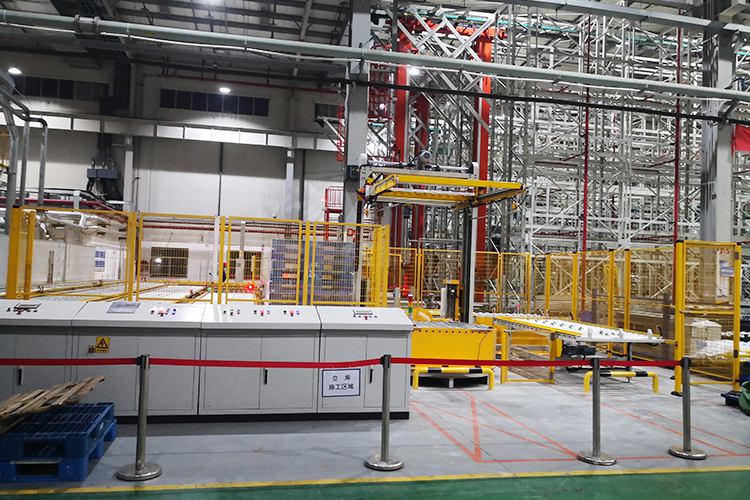
Top film covering improves protection of the upper surface
Traditional stretch wrapping machine only cover the sides of a pallet; the top layers (boxes, bags, drums) remain vulnerable to rain, dust and falling objects. Before side wrapping, the pallet wrap & top-film machine automatically lays a PE top film over the load and fixes it in place via a mechanical arm, forming an independent barrier layer on the upper surface. This top-film layer not only reduces the ingress of external contaminants but also reduces abrasion between stacked pallets, making it well suited for industries that require high visual and transit standards. For paper products, small cartons or moisture-sensitive materials, top coverage significantly improves packaging reliability.
Wrapping system uses preset tension and wrap counts to provide secure coverage
The wrapping machines subsystem consists of a rotary mechanism and a pre-stretch film carriage. Adjustable tension and wrap counts allow the top film and side film to merge into an integrated structure. The machine auto-measures load height and performs spiral wrapping from bottom to top. When wrapping near the top layers, it automatically executes reinforcement turns so the top film and side film adhere tightly, preventing air ingress or film lifting during transport.
Automation reduces manual work and improves consistency
Manual top-film and manual wrapping require operators to climb, measure, cut film and seal — time-consuming and unsafe. The pallet wrap & top-film machine features automatic top film placement, automatic film clamping and automatic film cutting so the entire operation runs without direct manual intervention; staff only need to place the pallet in the station. Automation not only speeds packing but, more importantly, improves packaging consistency and appearance standardization. Whether used for batch shipments or integrated with conveyors, the pallet wrap & top-film machine maintains steady cycle times and repeatable performance, stabilizing the packing station for long-term operation.
Adapts to many cargo types and industry conditions
The machine is highly compatible in warehouses with large height differences and mixed cargo types. Cover film tension, top-film size and film carriage lift speed are all configurable to match industry needs, allowing adaptation to cartons, drums, bags, boards and chemical barrels. For busy outbound seasons or operations that frequently switch pallet types, the pallet wrap & top-film machine keeps a stable working rhythm so packing lines can run continuously under varying loads.
Use case: improved outbound quality and reduced transport loss
A daily-chemical company often experienced dust ingress on the top layers during loading, especially in humid southern seasons. After installing a pallet wrap & top-film machine, the combined top and side film formed five-side protection. The company reported noticeably less dust in storage and significantly reduced moisture incidents during transport; packaging appearance became neater and more uniform.
The pallet wrap & top-film machine’s coordinated top-film and side-wrapping structure makes pallet packaging more complete, better fitted and continuously protective. The machine adapts to many industry scenarios and helps businesses reduce damage, improve packaging quality and enhance transport performance.