

Many Wrappers, One Goal — Efficiency and Savings
With smart packaging on the rise, wrapping machines have become vital for efficient shipping.
However, with so many options — pallet, rotary arm, inline, mobile, or horizontal wrappers — buyers often struggle to choose.A well-matched machine improves efficiency, reduces film usage, and enhances load safety.
1. Define Packaging Needs: Product Characteristics Determine Type
Palletized goods: pallet or inline wrappers for standard use.
Tall/heavy loads: rotary arm type to avoid instability during rotation.
Limited space / scattered loads: mobile type for flexibility.
Long products (pipes, profiles, rolls): horizontal wrapper.
Dust/moisture protection: top sheet wrappers for five- or six-sided sealing.
2. Match the Automation Level to Production Mode
Manual packaging: semi-automatic wrappers — low cost, easy to use.
Production lines: inline automatic wrappers — fully unmanned operation.
High-frequency shipping: wrappers with auto film cut & strap integration for faster cycles.
Choose models with future capacity scalability to avoid replacement later.
3. Focus on Film Efficiency and Energy Consumption
High-quality machines feature power pre-stretch systems that save 20–35% film.
Evaluate motor efficiency, component quality, and maintenance costs to ensure long-term reliability and lower operating expenses.
4. Choose Trusted Brands with Reliable After-Sales Support
Select manufacturers with independent R&D, standardized parts, and responsive service.
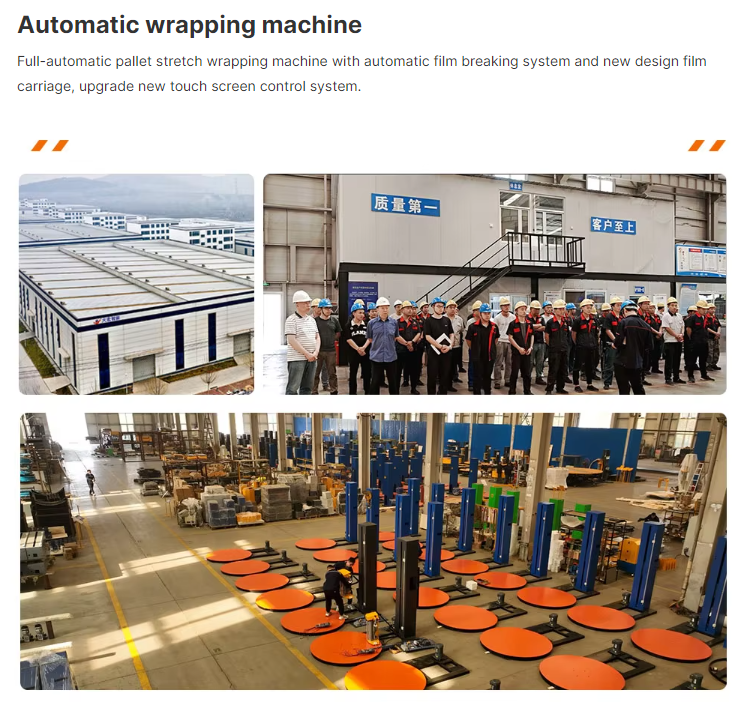
Visit production sites to check control systems, pre-stretch units, and film carriage stability before purchase.
5. Case Example: Logistics Company Doubles Efficiency
A logistics firm upgraded from manual wrappers to an inline automatic machine, reducing cycle time from 2 minutes to 45 seconds and cutting film use by 30%, achieving full automation.
Conclusion:
The best machine isn’t necessarily the priciest — it’s the one that matches your product, workflow, and efficiency goals.
With proper selection, companies can achieve stable, economical, and intelligent packaging automation.